Saturday, March 27, 2010

The WAIT

A few months ago I could only imagine what "the wait" would feel like and now I feel like a seasoned veteran. I know we've only been waiting for 3 1/2 months, but we started the whole process 6 months ago and mentally I started this journey before then so it seems a lot longer to me. I know couples who have waited for years to be matched and my heart goes out to them. We joined this agency for a few good reasons, one of which was their high volume of birth mothers and that their average wait was about 6 months. In our 4 short months we have been shown to at least 10 birthmoms. I want to say a couple more, but I kind of lost count. Most have chosen other wonderful couples. We're still waiting to hear about 2 little girls due in May. We are also waiting to hear about an immediate adoption where the baby will be discharged from the hospital on Monday. This is our second immediate placement opportunity, and by that I mean we have our profile shown amongst others and then anxiously wait for a phone call. The first time I was a nervous wreck, just hoping and praying we would be picked and frantically running around to prepare "just in case". Many of you know how I tend to be a little over prepared sometimes. Afterward I had a sad day returning a few tiny clothes, a car seat and a blanket. I was really unprepared at the time so I was just getting some basics no matter the cost, and returned them so I could do my usual bargain hunting and product reviews. I am more prepared this time, but not quite as anxious. Of course I would be absolutely thrilled, but I'm trying to hold my emotions a little more closely so as not to be as disappointed. This journey is quite the roller-coaster with all it's ups and downs.  It's hard to feel too sad when you know there is a couple who just received the call of their dreams, the one they've been waiting for too.  I feel so blessed to have my two little boys and look forward to another child to love. I just hope there's a birthmom out there that looks at our profile and just feels that connection, knowing that we are the very family that will give her child everything she hopes for.  Although it hasn't happened yet we're still holding on to hope.  Thanks to the great adoption laws in Oregon we can keep hoping right up until we move to Denver, so we've got a couple more months to go.  No matter the outcome this has been a wonderful journey thus far and I don't regret it for a second.  I just hope it has the outcome we so desire.  Keep your fingers crossed for us!


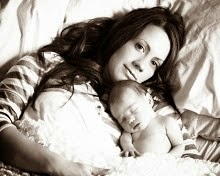
This is my precious little pal Annie. I snatch her from her mommy (my fabulous friend Rochelle) to get my baby fix. She is such a sweet little girl and always good for a snuggle.

Evan & Dallin

The boys are pretty excited for a baby to join our families. They talk about it often and to anybody as if it's no big deal. They are such sweet little boys and I know they will be excellent big brothers. They like to tell me about the wonderful things they will do for their new baby when it comes. Of course both have made it quite clear that they will have nothing to do with poopy diapers. They both have a lot of love to give as shown by the many hugs and kisses I receive everyday without even having to ask. I am so lucky and so proud to be their mother.


Family of Adoption - Joyce Maguire Pavao

I have read a few articles and bits of information about open adoption trying to get a feel for what it is. Most of the experience we’ve had with adoption is more closed. This is the first book I’ve read cover to cover about openness in adoption and it has been the most beneficial in painting a good picture of what it can be. It gave great evidence to convince me of the importance of open adoption not only for the adopted child, but for the birthmom as well. Open adoption is the best choice and there is no set way for it to work. It is a process that is ever changing. The child, the most important factor in adoption, is kept as the center focus of the whole process. Their well being and happiness is the motivator for all decisions and for all those involved; birth family, adoptive family, extended family, teachers.

I especially appreciated the chapters on the different stages of life and the different issues that may arise at each of the different stages. The stories were helpful to give real life examples, but not only what may happen but also what to do to help them through the different stages. Being an adoptee is very complex and there is no one way they should grieve or process all the different aspects of their life, but they do need to be surrounded by those who are educated. I am grateful for the knowledge and insight it has given me and have passed it on to extended family so that we may all be educated for the benefit of our loved family member.

Favorite Quotes – “Adoption is not an event. Adoption is not a snapshot in time. It is a moving picture that goes on through this life and into the ones that follow.” “Adoption is not about finding children for families, but about finding families for children.” “ The greatest gift that one can give children is to tell them their truths, especially when they are complicated and harsh.”

We are excited about the prospect of providing this history and connection for our adopted child. We want to provide the best life for them and we know that we will do anything we can to achieve this. Open adoption is just one of those important things we can do.

My views and ideas about adoption are constantly growing and maturing to a point I didn’t even know existed. It is so much more than I thought it would be and this book only makes me more excited for it.

20 Things Adopted Children Wish Their Adoptive Parents Knew - Sherrie Eldridge

This book was fabulous about helping us to try and understand a little what adoption is like through the eyes of the adoptee. There is no way for us to completely understand what it is that they are experiencing and how they feel, but we now have a great handbook on some things we might expect and ways that we maintain open communication so that we might be their best resource and supporter as they face the various emotions, thoughts and feelings of being adoptee throughout the different phases of life. We realize there is not one way that our adopted child will act or react to certain things and that we should be aware and attentive to help them. “I believe that one of the most sacrificial acts of love adoptive parents can do is to give up their preconceptions and agendas about what their child’s views ‘should’ be and be open to hear the conflicting emotions and thoughts their child often experiences.”

Something that really stuck out is allowing the adopted child to grieve, to work through the emotions that come with experiencing such a great loss at such a young age. We can’t treat them as if nothing has happened and just love all their problems away. We need to acknowledge what they have experienced and not only allow them to grieve but encourage and help them grieve their losses. We need to be honest and open about their loss, go to their place of “fantasy”, help them find any answers they are seeking and encourage open communication about their birth family.

Adoptees deal with a lot of conflicting emotions and are often torn between honoring their adoptive family and wanting to know their birth family. “On one hand he wants to honor the ways in which he is separate and unique from you; on the other, he longs for connection to the missing parts of who he is.” Recognize and celebrate their unique differences, and help them know that they don’t need to disregard the past. Questions about their birth family will arise through the different stages of life. It’s important to be involved, “She wants you to gently help her discover the disintegrated parts of her identity and then reconnect the separated pieces.” It will take dedicated parenting which is what we hope to do. We want to be the best parents we can and help our adopted child to be the best they can. This book is fabulous and will prove to be a great resource in the years to come. It also listed so many other books for us to read and help us understand more about what our adopted child may be experiencing. Knowledge is power.

Wednesday, March 10, 2010

Attachment Parenting Book - William (M.D.) & Martha (R.N.) Sears

One of the major concerns I have with the adoption of a little one is with attachment. I don't worry that I will love and care for the child, but it is so different then carrying the child within you for nine months. I was always intrigued with the studies where newborn babies will turn to the sound of their parents voices and to their mothers smell shortly after birth. This child whom we will adopt has never heard our voices and yet I will be the voice comforting them when they're crying and singing songs as they go to sleep. I worry about forming that strong attachment so that I am calming and soothing to the child and that their little bodies aren't in distress because it longs to be in the environment they're use to.  It's not as worrisome in bringing a newborn home to hospital as it would be to bring home a child who has been raised in an orphanage for a few months.  However, I feel that this book has given me the extra confidence I need to know that there are things I can do to form those attachments for the both of us.  I don't believe I will do everything in this book to the extent that they go, but Dr. Sears even states to do what you are comfortable with, to take these suggestions and incorporate them into your family as you see fit. I wish I would have read this book before I had my first child, but a lot of it goes along with what I already think and feel.

Goals for attachment
Birth Bonding - Spending as much time as possible with the infant after birth.
Breast Feeding - It may sound strange, but it was always a wonderful bonding time with my two boys and I would love to have that with this child. I'm trying to begin lactation again and have a supplemental nursing system where the child latches and receives the necessary milk through a soft tube inserted in their mouth. I did recreational nursing and all kinds of crazy stuff while Evan was in trying to grow and learn how to eat so it's nothing new to me.
Baby Wearing - Wearing the baby as much as possible wherever we go, even around the house. I did this quite a bit with Evan and it just helps their little bodies stay more relaxed so they can grow. Kangaroo care is some one one one skin contact that is very relaxing for the child as well. It's something Matthew and I can both do.
Belief in Baby's Cries - learning the different cries and what they mean so that I feel comfortable and capable to be able to provide for the baby.
Bed Sharing - Dallin was so much happier and slept so much better when he was with me. It just depends on the baby. Evan preferred being in his space while Dallin just loved snuggling so it goes back the belief in baby. Knowing the needs of my baby and what is best for them.

I'm so ready! I can't wait to have a little one again and long to be surrounded by everything baby. I hope it happens soon.

Wednesday, March 3, 2010

MAKING ROOM IN OUR HEARTS

Open adoption was a new concept for us. We had heard a little about it and had a general idea of what it was. This book has really helped us not only understand how it can work, but also the wonderful benefits it has for the adopted child. We look forward to being able to do this for our adopted child. if gave a lot of different stories of the experiences of others. Some good and some not so good. We realize that just as any relationship it will not be predictable and will most likely not go exactly as we hope, but we will just give it our best.

Making Room in Our Hearts - Keeping Family Ties through Open Adoption - Micky Duxbury

Here's what we learned:
Adoption has a profound impact on the adopted child's identity and their experience of loss.

It will enhance the child's sense of self. It is part of the child's birth right to know more about those who created them: their history, their decision-making about adoption, their concern for the child, and their dreams for the future.

Through research, ersonal accounts, and case histories it is apparent that the failure to recognize and grieve for the losses of adoption had long term effects.

The closed system did a disservice to the members of the adoption triad. It kept birth parents from being able to acknowledge the depth of their loss and offered few resources to help them come to terms with their decision. Birth mothers who longed to know more about how their child was doing were left with gaping wounds. It left adoptive families without full entitlement to be parents, as they were given few tools to assist their children in developing their whole identity. And the children were left wondering: Who am I? Who made me? What are my birth parents like? Where did I get my nose? Was my father musical too? And why did they make the decision that they couldn't raise me?

Every adopted child faces the task of growing up with a unique set of strengths and vulnerabilities, some inherited, others influenced by prenatal exposure. and some from their adoptive family. Every adopted child will have his or her own unique concerns and questions about the relationship of his adoption to his developing sense of self. At the same time that adoptive parents honor the individuality and uniqueness of their children, they need to acknowledge the additional complexity that adopted children face in the formation of their identity.

The awareness that someone intimately related to you is out there, but you do not know where, is often part of the consciousness of an adopted person. For those who know nothing about their origins, the tendency to try to fill in the picture with fantasizing can be very strong. Because many adopted persons wonder, search, and fantasize above birth families does not mean that they do not love and value their parents.

Child centered open adoption is just that: all those who are concerned with an adoption, whether they are the birth parents, adoptive parents, or adoption agency personnel, consider that the child's current and future needs are at the very center of the adoption process.

People meet their in-laws with the understanding that they will be entering into a long-term relationship primarily because they both love and are concerned for the well being of the same person. They may have different values. They may have different lifestyles. But often, even before getting to know each other very well, they make a commitment to making the relationship work because doing so is in the best intrerest of someon else, to whom their commitment is firmly established.


We should not underestimate the magnitude of the suffering that many birth mothers go through, while they have relinquished their role as parents, they have not give up their right to love and contribute to that child's life.

Adoptive parents need to understand that they are not "doing a favor" to the birth parents by promising openness. Agreements about openness need to come from a mutual understanding of the benefits to the child.


Open adoptions are relationships more than agreements.  The child's needs in open adoption are better met by a good relationship between birth and adoptive parents than by court mandated letter, phone class or visits.
The families that seemed to do the best were those that understood that it was "normal" to have ups and downs in the degree of contact.

Openness is an opportunity, not an obligation.

Children understand the difference between a close aunt whom they might see frequently, or a godmother who is an integral part of their life, and their parents, and the same is true of birth parents. Children may love them, they may have a special place in the life of their family, but they are not parents. We need to remember that if the adults involved are not confused or conflicted about their roles, the children are not likely to be confused either.

Open adoption is not co-parenting, but it is a sharing of the history and the love for our children.

The fact is that no matter what the type or frequency of contact, no matter how intimate or distant from each other they may become, birth and adoptive families will always be related to each other through their ties to the child. 

Adoptive parents need to respect the primacy of the relationship with the birth parents, it is important to recognize that open adoption is about birth families, not just birth parents.

Remember why you are doing this. It's not just a matter of making sure you are comfortable. Insecurities will come up, but it is important to see if you can stretch outside of your comfort zone for the benefit of the child. You have to try to remember that this isn't all about us.

Open adoption is a gift not a burden.

Will openness complicate your lives? Yes it will, but it will complicate your lives in ways that add immeasurable depth and richness to you,  your family, and your children.

Adoption is asking two women to come together in a very intimate relationship, and each one has what the other one desperately desires.

The ability to set and maintain boundaries is one of the most important ingredients of a healthy open adoption.

Birth and adoptive parents need to acknowledge each other's role in helping the child develop a cohesive sense of self.